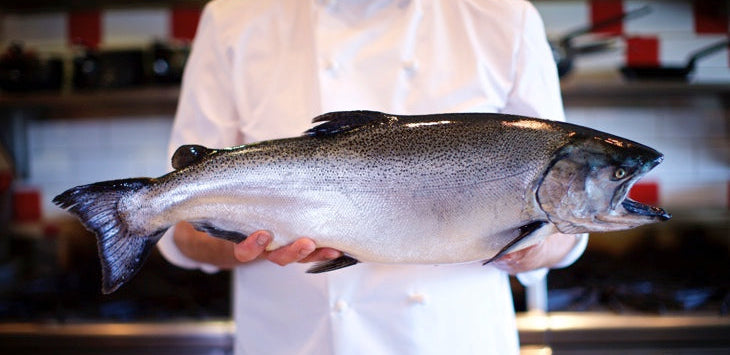


Two of Ocean2Table's most popular salmon, wild sockeye and farmed coho, are genuinely different fish. Here's how to tell them apart and when to reach for each.
On this page 4
Ocean2Table carries both wild sockeye and farmed coho salmon, and they're not interchangeable, they cook differently, look different on the plate, and suit different meals. Here's what actually separates them.
Where they come from
Wild sockeye is exactly what it sounds like, caught in open water, gill-net and seine-caught, never raised in a farm. Our coho is farmed. Neither is better across the board, they're just different products with different strengths, and knowing which is which helps you pick the right one for what you're cooking.
Color and fat
Sockeye has the deepest red flesh of any Pacific salmon. That color comes from its natural diet in the wild, small crustaceans like krill contain a pigment the fish absorbs. Sockeye also runs leaner than coho, less fat marbled through the flesh, which is part of why it holds up so well to high, fast heat like grilling or searing without falling apart.
Farmed coho tends to run a bit milder in flavour and slightly higher in fat than sockeye, with a lighter orange-red color. That extra fat makes it a bit more forgiving if you're newer to cooking fish, there's more margin before it dries out.
Texture and flavor
Sockeye has a firm, dense texture and a bold, distinctly "salmon" flavour, it's the one most people picture when they think of a classic salmon fillet. Coho is softer and milder, a good entry point if sockeye's intensity is more than you're looking for, or if you're cooking for someone who says they "don't really like fish."
Which to buy for what
- Grilling or searing hot and fast: sockeye handles it better thanks to the leaner, firmer flesh.
- Baking, poaching, or a gentler method: coho's extra fat keeps it moist even if you're less precise on timing.
- A bolder, more traditional salmon flavour: sockeye.
- A milder dish, or cooking for picky eaters: coho.
Both are genuinely good options. This isn't a case of one being the "correct" choice, it comes down to what you're making and how you like to cook.
Shop: Wild Sockeye Salmon (Whole, Fillets & Portions) · Farmed Coho Salmon Fillets