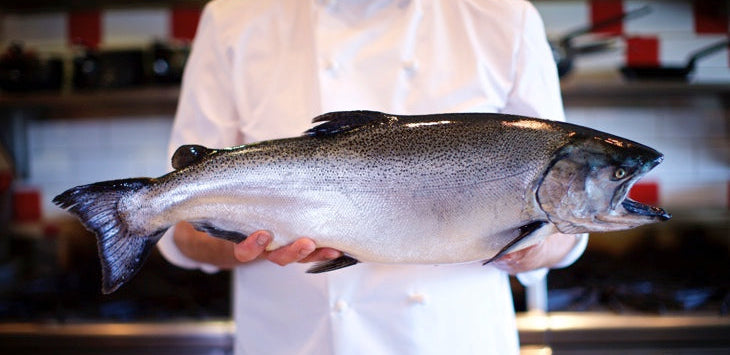


Most of Ocean2Table's catalog is sold frozen. Here's what that actually means for quality, and why it's often the better choice, not a compromise.
On this page 5
Most of what Ocean2Table sells is sold frozen, and for a lot of people that still sounds like a downgrade from "fresh." It's worth being direct about this: for wild and farmed seafood handled the way LGF handles it, frozen isn't a lesser product, it's a different logistics choice, and often the more reliable one.
What "fresh" actually means at a seafood counter
Unless you're buying directly off a boat the same day it lands, or from a supplier close enough to a dock to sell same-day catch, "fresh" seafood at a typical counter has usually already been sitting for a day or more since it was caught. It just hasn't been frozen. That's an important distinction: "fresh" describes handling, not necessarily how recently the fish was caught.
What flash-freezing does
Seafood frozen shortly after catch, at commercial flash-freezing temperatures, is locked in close to its catch-day condition. The texture and flavour differences people associate with "frozen fish gone bad" almost always come from slow home-freezer freezing, or from fish that sat too long before freezing, not from the freezing process itself when done properly at a commercial level.
Where frozen actually wins
Consistency. A frozen product doesn't have a narrow window where it's "at its best." You control when it gets thawed and cooked, rather than racing a clock you can't see.
Less waste. You portion and thaw only what you need, rather than needing to use up a fresh purchase within a day or two.
Wider access. Species like wild sockeye salmon or Wild Pacific halibut aren't available fresh year-round even in BC, they're seasonal catches. Freezing is what makes them available to order outside their short fishing season.
How to get the best result from frozen seafood
Thaw in the refrigerator, not on the counter or under hot water, it's slower but keeps the texture intact. Once thawed, treat it like fresh fish: cook it within a day or two, don't refreeze it after thawing, and check for the same freshness cues you'd look for at a counter (firm flesh, clean smell, no excess liquid pooling in the packaging).
The honest tradeoff
There's one real tradeoff: frozen fish needs planning ahead for thawing time, where fresh fish is ready to cook the moment you buy it. That's the actual difference, not a quality gap, a convenience one, and it runs the other way once you factor in how much longer frozen keeps.
Shop the full catalog: All Seafood